 By Ethan Brooks
Updated November 2026
Thanksgiving table decorations ideas work best when they tie together three things: a clear color palette, a centerpiece at the right height, and a few small accents that repeat across the table. This guide walks you through how to plan those elements, build a layout that fits your space, and avoid the mistakes that make a fall table look cluttered. You will finish with a table that looks intentional without a lot of last-minute effort.
Start With a Palette and a Theme
Pick three to four colors before you buy or gather anything. Warm neutrals with one accent color, such as cream, oatmeal and rust, usually read as classic fall. Deep green, burgundy and gold feel more formal. Limiting your palette keeps the table from looking busy, even when you mix natural materials like wood, wheat and pinecones.
Shopping for one? See our guide: 6 Best Thanksgiving Dining Table Decorations for Fall Dinners (2026).
Decide on a theme too. A harvest theme leans on pumpkins, gourds and dried grasses. A rustic theme uses burlap, wood slices and mason jars. A formal theme relies on taper candles, linen napkins and polished silver. Whichever you choose, repeat at least one material across the whole table so it reads as a single design. For a deeper look, Ideas for Table Decorations for Thanksgiving Dinner: 7 Fall Looks covers this in detail.
Build the Centerpiece
The centerpiece sets the tone, so give it the most attention. Keep it low enough that diners can see each other across the table, generally under about 12 inches tall for a standard dining setup. A long, low arrangement works better than a tall tower for seated conversation.
Layering a Simple Centerpiece
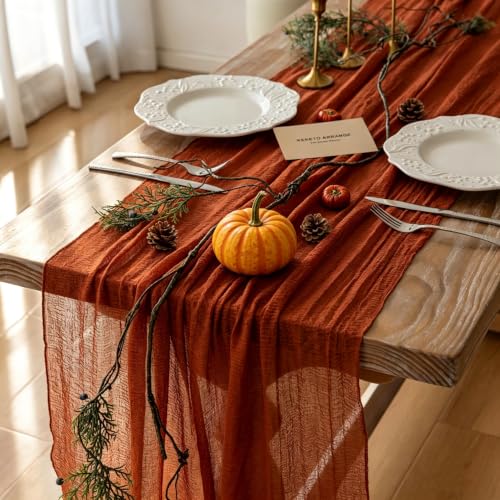
Start with a base: a wooden tray, a runner or a flat platter. Add the largest element first, such as a cluster of pumpkins or a bundle of branches, placing it slightly off-center. Fill the gaps with smaller items like candles, gourds or fabric leaves, and finish with a few trailing elements such as dried grasses or eucalyptus. Step back and check the arrangement from a seat at the table before you call it finished.
Dress the Place Settings
Place settings are where guests will look most closely, so small details matter. Fold napkins into simple shapes, tuck a sprig of dried wheat or a small leaf under the napkin ring, and place name cards at the top of each plate. Keep the repeated accent consistent with your centerpiece color so the eye moves smoothly down the table.
Use a Runner and Layered Lighting
A table runner anchors the centerpiece and gives the table a finished edge. Linen or burlap runners suit rustic setups, while satin or velvet works for formal dinners. Lay it so it hangs about 12 to 16 inches past each end of the table, or keep the ends even if the table is short.
Lighting changes the mood more than almost any other element. Use three or more candles of mixed heights, or add battery-operated string lights woven through the greenery. Keep open flames away from dried materials and check that candles sit on stable holders.
Step-by-Step Checklist
- Choose a palette of three to four colors.
- Measure the table and set a centerpiece height under about 12 inches.
- Build the centerpiece on a base, starting with the largest element.
- Lay out a runner and place candles or lights.
- Fold napkins and add one accent to each place setting.
- Step back, check sightlines from each seat, and adjust.
Common Mistakes and Tips
- Overcrowding the table. Leave room for plates, glasses and serving dishes.
- Choosing a centerpiece that blocks conversation across the table.
- Mixing too many unrelated colors and textures.
- Placing candles near dried flowers or paper napkins.
- Forgetting the serving table, which can carry a smaller version of the theme.
Recommended gear
- Battery-operated taper candles let you add warm light without open flames near dried materials. View on Amazon
- Linen table runner gives a neutral base that suits most fall palettes. View on Amazon
- Floral foam and wire stems help hold branches and gourds in place on a low centerpiece. View on Amazon
FAQ
How tall should a Thanksgiving centerpiece be?
Keep it under about 12 inches for a standard dining table so guests can see one another easily. Taller arrangements can work on a buffet or sideboard instead.
How many colors should I use on the table?
Three to four colors is a good range. A neutral base with one or two accent colors keeps the table cohesive.
Can I reuse decorations from year to year?
Yes. Neutral pieces like wood trays, candles and linen runners carry over well, and you can swap seasonal items like fresh produce or foliage each year. For more ideas, see Thanksgiving Day Table Decorations Ideas: 7 Steps for a Warm Fall Feast and Thanksgiving Dinner Table Decorations Pictures: 7 Layouts to Copy This Fall.
Conclusion
Thanksgiving table decorations ideas become easy to apply once you settle on a palette, keep the centerpiece low, and repeat one or two accents across the table. Start with the centerpiece, then add the runner, lighting and place settings. Walk the table from each seat before guests arrive, and you will have a fall setting that looks planned and feels welcoming.
Related reading
Ready to choose one?
About Ethan Brooks
Ethan Brooks is part of our editorial team and reviews and edits our non-christmas seasonal decor guides, checking product details against manufacturer specifications and owner feedback.