 By Ethan Brooks
Updated November 2026
Crate and Barrel thanksgiving table decorations can give your dining table a polished, warm look without a lot of guesswork. In this guide, you will learn how to choose pieces that suit your color palette, build a centerpiece that does not block conversation, layer linens and tableware, and finish with small details that make the table feel complete. By the end, you will have a repeatable method you can adapt to a small family dinner or a crowded holiday table.
Start With a Color Palette and a Mood
Before you shop or pull items from storage, decide on two or three colors and one overall mood. Many shoppers gravitate toward the store’s seasonal assortments, which often lean on warm neutrals, burnt orange, deep red, sage, cream and natural wood tones. Choosing a palette first keeps you from buying a dozen pretty pieces that clash when placed together.
Shopping for one? See our guide: 6 Best 4th of July Table Decorations for Patriotic Tables in 2026.
A simple way to narrow your choices is to pick a base neutral (cream, linen white or warm taupe), one accent color (rust, merlot or muted gold) and one natural texture (wood, ceramic or wheat). Everything you add should fit within that trio.
- Formal: ivory linens, gold-rimmed plates, taper candles in deep red.
- Rustic: burlap or natural cotton runners, wooden chargers, pumpkins and dried grasses.
- Modern harvest: matte black accents, neutral ceramics, eucalyptus stems and clean white linens.
Plan the Table Layout Before You Decorate
Measure the table first. A standard rectangular dining table seating six to eight people is often about 36 to 40 inches wide and 60 to 84 inches long. Knowing those numbers helps you size runners and decide how tall your centerpiece can be.
Measure and Mark
Lay a table runner along the center and check that it hangs about 12 to 15 inches past each end. For a round table, a topper or square cloth should drop evenly on all sides. Mark where each place setting will sit, allowing roughly 24 inches of width per guest so people can eat comfortably.
Choose the Right Centerpiece Height
The most common guideline for centerpieces is to keep them low enough that guests can see each other across the table. Many hosts aim for arrangements under about 12 inches high, or taller pieces placed at the table’s ends or in clusters at the sides. This keeps the table social.
Build the Centerpiece
A centerpiece anchors the whole look. Start with a base item, such as a runner, wooden tray, large ceramic bowl or a grouping of pillar candles. Then add height, texture and one or two seasonal accents.
Use Odd Numbers and Varied Heights
Grouping three or five items usually looks more natural than pairing them. Mix a tall taper or pillar, a medium pumpkin or gourd, and a low cluster of small accents. Keep the tallest element near the center rather than at the edges.
Add Natural Elements
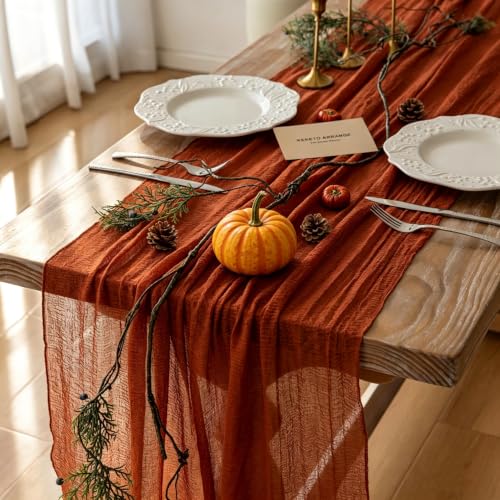
Mini pumpkins, dried wheat, eucalyptus, rosemary sprigs and pinecones all read as seasonal without overwhelming a plate. Add them in small amounts and tuck them into the base of candles or a bowl so they look intentional.
Layer Linens and Tableware
Linens set the tone of the entire table. A neutral tablecloth beneath a shorter runner adds depth without competing with dishes. If you prefer a single layer, choose a cloth in a color that echoes your accent shade.
Place Settings
Set a charger first if you have one, then the dinner plate, salad or bread plate, and flatware in the order of use. Napkins can go on the plate, to the left of the forks, or in a glass. Folded napkin styles look best when they match the level of formality you chose earlier.
Glassware and Candles
Group glasses at each place setting in a slight arc, water first and wine second. Keep candles away from napkins and dried botanicals. Trim wicks to about a quarter inch before lighting to reduce soot and flicker, and never leave candles burning unattended.
Finish With Small Details
Name cards, a small seasonal sign, or a few scattered leaves on the runner add personality. Place cards can be tied to a sprig of greenery or set in a small holder. These touches help guests feel welcomed and make the table photograph well.
Checklist for Setting the Table
- Choose a palette of two or three colors plus one texture.
- Measure the table and mark seat positions.
- Lay the base linen and runner, centered and evenly hanging.
- Build the centerpiece with varied heights and keep it low.
- Place chargers, plates, flatware and napkins.
- Set glassware and light candles before guests arrive.
- Add name cards and final accents.
- Step back and check sightlines across the table.
Common Mistakes
- Centerpieces that are too tall. If guests have to lean to see each other, lower the arrangement or split it into two smaller groupings.
- Too many colors. Sticking to a clear palette keeps the table calm and cohesive.
- Flammable decor near flames. Keep dried botanicals and paper items at least several inches from candles.
- Overcrowding the place settings. Leave enough room for plates, drinks and serving dishes.
- Skipping a test run. Set the table a day early to catch spacing issues.
Recommended gear
A few practical items make it easier to get a finished look. These are useful regardless of which specific Crate and Barrel pieces you choose.
- Table runner: A linen-blend runner gives the table a clean base and helps tie the palette together. View on Amazon
- Taper candles: Unscented tapers in a warm shade work with most harvest palettes and keep the centerpiece at a manageable height. View on Amazon
- Wooden charger plates: Chargers add a layer of texture under dinnerware and suit rustic or modern harvest looks. View on Amazon
- Name card holders: Small holders keep place cards upright and make seating easy for guests. View on Amazon
Related Ideas to Explore
If you want more inspiration, browse 7 Best Thanksgiving Decorations for Table Settings in 2026 for additional product-style options, or see How to Set a Thanksgiving Table: Layouts, Place Settings and Simple Decor for a deeper look at seating and place setting order. For a centerpiece built to leave room for food, Thanksgiving Centerpiece Ideas That Leave Room for Food and Conversation offers layouts that work well with busy dinners. Readers who want a warmer look may also like 7 Best Thanksgiving Day Table Decorations for a Warm Fall Feast.
FAQ
How tall should a Thanksgiving centerpiece be?
Many hosts keep centerpieces under about 12 inches so guests can see across the table. Taller pieces work best at the ends or sides.
What tablecloth size do I need for a standard dining table?
For a rectangular table, a cloth that drops about 8 to 12 inches on each side usually looks balanced. Measure your table length and width to confirm.
How far should candles be from food and napkins?
Keep open flames several inches away from napkins, linens and dried botanicals. Trim wicks and never leave candles unattended.
How many items should I put in a centerpiece?
Three or five varied items tend to look more natural than an even number. Keep the palette limited so the arrangement feels intentional.
Do I need chargers for a formal look?
Chargers are optional but help frame each place setting and add texture. They are especially useful for formal or layered looks.
Can I mix store-bought and natural elements?
Yes. Pairing seasonal ceramics or candles with real pumpkins, greenery or wheat usually looks more relaxed and personal.
When should I set the table?
Setting the table a day ahead lets you check spacing and sightlines. Add fresh greenery and lit candles shortly before guests arrive.
Conclusion
Crate and Barrel thanksgiving table decorations work best when you start with a palette, measure the table and keep the centerpiece low and balanced. Layer your linens and place settings carefully, then finish with a few personal details. A clear plan keeps the table welcoming and easy to adapt for any group size.
Related reading
- DIY 4th of July Table Decorations: 9 Easy Projects with Steps
- Birthday Party Decorations at Home: Balloons, Backdrops and Tables
- Baby Shower Decorations: Themes, Tables and Simple Setups
Ready to choose one?
About Ethan Brooks
Ethan Brooks is part of our editorial team and reviews and edits our non-christmas seasonal decor guides, checking product details against manufacturer specifications and owner feedback.